


Improving the experience for residents
We know that doing repairs well is important to residents , so we’re continually looking at ways of improving our service.

E-bike improves service as well as reducing emissions
Caretakers working in West London are reducing emissions and improving the service they provide for residents thanks to a new electric micromobility scooter.

Being local benefits everyone
We’ve introduced a new local repairs service to improve the experience for residents, deliver better value for money and increase accountability.

Parkside Youth Pop-ups
We’re listening to residents to make sure we offer the support and services that each neighbourhood needs.

Kruise overcome anxieties
Our apprenticeships offer alternative ways for colleagues to improve their career prospects.

No job is too much for Peabody colleague
We take learning and development seriously and offer colleagues the opportunity to enhance their prospects at every stage of their career.

Surplus food saves locals more than £200,000
The London Food Insecurity Network (LFIN), our partnership with The Felix Project, HACT and other G15 members, is going from strength to strength.

Innovative alternative to replacing windows
We’re trialling a simple but innovative way of preparing residents’ homes for climate change.

£5,000 to help local groups
We work closely with partners to support people living in local communities.

Listening to our residents
Residents were concerned about the way we responded to complaints. So we helped them set up Residents’ Association to tackle the issues together.

Tackling food poverty in London
Together with the London Food Insecurity Network and other housing associations, we’re working to create a London where no one goes to bed hungry.

Providing valuable support
The high cost-of-living is challenging for many people. We work with a wide range of partners who can support residents to receive the help they need.

Benefits of apprenticeships
For our colleague Dave Prouten, apprenticeships have benefits both for the individual apprentices and the organisations that take them on.

It’s never too late to learn
Billy was struggling to know what he wanted to do with his life. Starting an apprenticeship gave him the opportunity to earn a wage while gaining valuable skills.

Food bank provides support
With so many people struggling with the cost-of-living, food pantries and community kitchens are becoming a lifeline for many Londoners.

Fostering a culture of learning
From the garden centre to the building site, Roselie’s apprenticeship gave her the perfect opportunity to kick-start her career and learn new skills.

Hospital Discharge Service
There are many challenges associated with leaving hospital and returning home. Our Hospital Discharge Service is here to help our residents.

Greener homes programme
Improving the energy efficiency of residents’ homes will help us achieve our goals of lowering energy bills and reducing our carbon footprint.

Improving blue spaces
We’re committed to bringing everyone along on our journey to become a net zero organisation and that includes residents, partners and colleagues.

Holloway Park regeneration
Our approach to development isn't just about the homes we’re building. We also look at how we can add value to the surrounding area and local communities.

The Gateway Garden initiative
Town and Country Housing is working in partnership with other organisations to support an initiative billed as ‘a place where people and plants can grow’.

Greening grey areas brings benefits to people and nature
Two previously grey 1960s housing estates, home to 1,700 people in South Thamesmead, are now bright, beautiful, biodiverse spaces thanks to an award-winning first stage of a £10m transformation of public space.

Community support comes in many shapes and sizes
There’s much more to the Pembury Community Centre than meets the eye. For some people it’s a base to meet up and chat. For others it’s a place where they can find activities to keep their children entertained.

Working with like-minded organisations to create value
We want to create value for our residents. Whether it’s providing homes that people want to live in, or the support that can help them thrive. So it makes sense that we want to do business with like-minded organisations.

All hands on deck for repairs day
No one likes waiting for things to be fixed. So we’re working hard to improve how we handle repairs.

New home feels like happiness
Happy, more confident, and free of stress is how a domestic abuse survivor describes herself after moving into her new home.

Saving money with the right help
James, a Peabody resident, saved a total of £950 thanks to help from Pocket Power, one of our financial support partners.
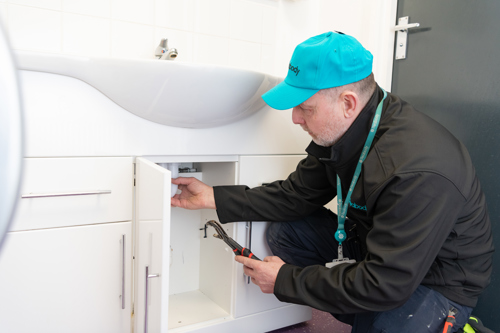
Improving the experience for residents
We know that doing repairs well is important to residents, so we’re continually looking at ways of improving our service.
On one February day in New Mansion Square, Battersea, we hosted a repairs day. Plumbers, electricians and other handypeople from a range of Peabody contractors, including Milverdene, Gilmartins, PBSL and Purdys, came together to visit 32 residents who had reported issues. All of them either had their issue fixed that day or were given an appointment for someone to come and sort the problem.
Thanks to the positive feedback from residents, we’re now holding other similar days across South London.
Elsewhere, our regional repairs teams are holding drop-in surgeries, where residents can turn up and report a problem in-person. Both programmes are part of our plans to become more visible in local communities and to help reassure residents that if they report a problem, it will be dealt with quickly and efficiently.
E-bike improves service as well as reducing emissions
Caretakers working in the Earl’s Court area of West London are reducing emissions, saving time, and improving the service they provide for residents thanks to a new electric micromobility scooter.
The bike, which was added to our West London fleet in March, has halved the time it takes caretakers to travel between estates, giving them more time to keep residents’ communal areas clean and tidy.
Switching our fleet to electric vehicles is one of the pledges of our Sustainability Strategy, and while vehicle emissions account for only a small part of the Group’s overall carbon footprint, every small change helps. A small diesel van, which would have been used by the caretakers to travel between estates emits on average nearly two tonnes of carbon a year.


Being local benefits everyone
We’ve introduced a new local repairs service to improve the experience for residents, deliver better value for money and increase accountability.
After working with Peabody since 2018, KBH Haus has recently taken on one of our local repairs contracts in Essex, part of Peabody’s North Counties region. Their customer satisfaction rating is 88 percent.
The firm, which is based in Essex, is now responsible for just under 2,000 Peabody homes and believes being local makes a big difference when it comes to managing residents’ repairs.
“We’re able to offer a far superior service with a bit of TLC,” says Sam Whitmore, Director or Operations at KBH Haus.
And that’s not just him talking, we have the data to back up his claim. KBH are well within target when it comes to the quality of repairs, appointment attendance, and the way they communicate with residents.
The KBH contractors have direct contact with local Neighbourhood Managers. And because it’s the same repairs people on the ground in the community, they’re able to build relationships with residents, who are then more comfortable letting workers into their homes.
This means that fewer problems go unreported, and contractors can look ahead and consider preventative measures to solve issues before they become a bigger problem. “Ultimately everyone wins,” says Sam.
Parkside Youth Pop-ups
We’re listening to residents to make sure we offer the support and services that each neighbourhood needs.
Young residents at the Parkside Estate in Lewisham told us they felt overlooked. They wanted safe spaces, more activities, and a bigger say in what happens in their community. In response, we partnered with a local youth organisation to launch a series of pop-up events designed with, and for, young people.
The success was immediate. Young residents planned and delivered their own end-of-year celebration, building confidence and pride. Off the back of this success, we’re now helping set up a new Youth Panel to give them a stronger voice in shaping local services.
We’re also continuing to support holiday clubs and regular youth activities, creating safer, more engaging spaces all year round. The young people told us they feel more connected, more listened to, and more hopeful about what’s next.


Kruise overcome anxieties
Our apprenticeships offer alternative ways for colleagues to improve their career prospects.
For Kruise Clarke, her learning journey at Peabody has not only brought a promotion but also helped her overcome past anxieties and fully embrace her personal and professional development.
After two years working at Peabody, first in the Contact Centre and then as a Personal Assistant, Kruise was keen to gain a formal qualification and further her career. Unfortunately, she was put off by her negative experience at school, where ADHD meant she struggled in traditional learning environments and left with no qualifications.
During her time at Peabody, Kruise has demonstrated a natural aptitude for problem-solving and independent work. With the right support, she’s making great progress with the GCSEs she missed out on at school and has almost completed her Level 3 Business Administration apprenticeship.
Kruise now works as a Disrepair Lead, managing cases where the repair has not been dealt with appropriately. She won the Rising Star of the Year at our Apprenticeship Excellence Awards for her exceptional growth and commitment.
No job is too much for Peabody colleague
We take learning and development seriously and offer colleagues the opportunity to enhance their prospects at every stage of their career.
Tony Ayling has had a lot of roles since he started out as a Peabody Maintenance Caretaker on the Rosendale Road Estate in Lambeth in 1983. In that role, he did everything from the electrics to the decorating for 22 years. At that point, he took his future into his own hands in a move that he himself describes as ‘perhaps a little over-confident’.
During a routine home visit, Tony found a leak that had been there for years. Instead of just repairing it, he told his bosses that he could add more value by finding the cause of the leak… and the rest is history.
Now, 42 years into his Peabody career, Tony’s working as a surveyor for the Repairs team having gained qualifications in carpentry and residential surveying. “What I like about Peabody is that they’ve invested in me.”


Surplus food saves locals more than £200,000
As the high cost-of-living continues to affect many residents, the London Food Insecurity Network (LFIN), our partnership with The Felix Project, HACT and other G15 members, is going from strength to strength.
During the year, the LFIN supported 48 surplus food winter markets, distributing the equivalent of 62,000 meals that would otherwise have gone to waste.
It also provided 63 extra deliveries to our regular community partners, who were able to pass on 85,000 meals to local households. In total, this food saved people living in local communities £208,200.
Innovative alternative to replacing windows
Every little bit counts when it comes to sustainability.
We’re trialling a simple but innovative way of preparing residents’ homes for climate change.
By painting a clear coating on drafty single-glazed windows, we’ve successfully reduced the inside temperature by five degrees. The coating reflects the heat, preventing the room from overheating, and in the winter, we’ll be testing how it can keep warmth in.
We’re working with Window Insulation, specialists in energy-saving building products, who we met at the Mayor’s Sustainable Ventures event earlier in the year. It is an affordable, non-intrusive alternative to replacing windows.


£5,000 to help local groups
We work closely with partners to support people living in local communities.
Five community groups in Luton, including domestic abuse support groups Ebonista and Stepping Stones, have each been awarded grants of £5,000 as part of the town’s Healthier, Wealthier, Happier Communities Fund.
Developed in partnership with the Bedfordshire and Luton Community Foundation (BLCF), the fund supports local groups to address specific challenges, such as youth development and health inequalities, employment and economic inclusion, anti-social behaviour linked to gang and knife crime, and domestic abuse. The idea is to empower local organisations that often struggle to access traditional funding and help create lasting, positive change.
The other groups are Diverse FM, Dallow Amateur Boxing and the Mary Seacole Housing Association. Looking ahead, we hope to give an additional £10,000 in match-funded contributions to two of the groups next year.
Saving money with the right help
Demand for our financial support remains high.
James, a Peabody resident, saved a total of £950 thanks to help from Pocket Power, one of our financial support partners.
After contacting our Financial Inclusion team, James was referred to Pocket Power and successfully enrolled in the Affinity Water LIFT discount scheme.
On a follow up call, Pocket Power helped him get a new gas cooker through the Thames Water White Goods Fund and cut his monthly phone bill by more than half to £16.

Listening to residents
Residents at Mural House in Southwark were concerned about the lack of communication and response to complaints.
So we worked with them to address their concerns and make a plan to deal with them.
Residents now have direct access to key staff and can arrange meetings themselves. We also gave them money to set up an independent residents group and supported them to start community initiatives such as an allotment.
“Forming a Resident’s Association has brought everyone in our block together in a really positive way. We’ve been able to get to know one another better through the RA meetings and socials, and it’s enabled us to work collaboratively to tackle problems.
“We’ve used the start-up grant to begin work on a communal vegetable patch, and we have a louder and stronger voice to address concerns and issues we have with Peabody.”


Tackling food poverty
Thirty-five tonnes of food, enough for 80,000 meals, was saved from waste and given to Londoners in need over the Christmas period thanks to the London Food Insecurity Network (LFIN).
The LFIN gives struggling social housing residents in London access to more and better food, so no one goes to bed hungry. This is particularly important in the current environment where our latest Peabody Index showed that almost a third of those surveyed have a household income of less than £20,000.
We worked with The Felix Project, HACT and other housing associations to hold 76 winter food market events across the capital. Local people could stock up on fresh food and store cupboard ingredients and socialise in a warm and welcoming environment.
The winter markets were welcomed by residents, with one saying it hadn’t only helped them “massively financially”, but also mentally, as “chatting to people in the queue really cheered me up too”.

Apprenticeships benefit more than just the apprentice
For Dave Prouten, head of Connect Property Services, part of Peabody’s property maintenance division, apprenticeships are important for more than one reason.
The first is because he probably wouldn’t be where he is today without his own apprenticeship. And the second, is because they’re positive not only for the individual apprentices themselves, but also the organisations that take them on, and the wider economy.
For apprentices, it’s the chance to study for a career without going to university and getting deep into debt. And for those who are more practical and prefer to work with their hands, it’s a great route to gain on-the-job experience.
For social housing providers like Peabody and others in the wider construction sector, apprenticeships can help fill the gaps in the dire skills shortage that we’re currently facing. As Dave says, by teaching people how to do the job, we avoid losing essential trades skills and help advance our workforce.
“Apprentices get real life experience while being paid,” he says. “They provide an opportunity for people of all ages and abilities to learn new skills or improve their skills. It could be younger people trying to get into an industry, or someone returning to work after a long period off. Apprenticeships give people a good grounding in whatever industry they work in.”
He also believes apprentices bring enthusiasm and fresh perspectives. And in most cases, they are a great asset to the organisation they’re working with. There are also financial benefits for the organisation as they get to train people to do the jobs they need and create clear pathways for progression.
Connect Property Services currently has six apprentices based at Houghton Hall in Bedfordshire, in Peabody’s North Counties region. They’re learning skills in plumbing, electrical work and carpentry either at the training centre or by shadowing a colleague visiting residents’ homes to make repairs.
Peabody has a total of 40 apprentices enrolled in a variety of different roles across the organisation.
Valuable support
A resident in Wandsworth was struggling to pay her gas bill.
Our Financial Inclusion team helped her apply for a grant, only to find that she’d been missing out on £66 a week in pension credit since her partner died of Covid.
When she received the £10,296 owed to her, she was very happy and said: “I could probably have the heating on every year for life now!”


It’s never too late to learn
Billy Bennett isn’t shy to admit he should have worked harder at school. At 23 years old, he’s just passed his maths GCSE and says it was much harder to do now while working. But thanks to one of our partners, YouthBuild Ventures UK, Billy has had the chance to prove it’s never too late to learn.
Billy, who grew up in Abbey Wood in Thamesmead, works four days a week as an apprentice electrician on a construction site for homebuilder Durkan. He spends one day a week at college working towards a functional skills qualification – designed to help people develop their essential maths, English and ICT skills.
Billy is now on track to become a qualified electrician. And while he’s not in any hurry to leave the security and support of his trainee role, he’s excited by the potential his apprenticeship has given him.
“By the time I’m 40 I want to be higher up the ladder,” he says when asked about the future. “I now know that things don’t just get given to you. You have to show that you’re willing to work hard for what you want.” Asked if he’d recommend doing an apprenticeship: “Definitely,” he says. “It’s so worthwhile.”
Darwin Court food bank provides much needed support
The Darwin Court food bank in Southwark provides an essential service for about 90 residents each week, with the ages ranging from 16 to 94.
Thanks to partnerships with Purdy, one of our maintenance contractors who’s helping fund the project, and charities, The Felix Project and City Harvest who provide food donations, residents are able to pick up cupboard staples such as eggs, milk and bread.
For many (160 families are registered) it’s also a chance to get out of their homes, meet their neighbours and have a chat. With living costs continuing to rise and a reported 385,000 people using food banks last year, services like this are an important part of our commitment to providing help and support so residents can flourish.


Fostering a culture of lifelong learning, curiosity and progress
After studying for an apprenticeship in Business Admin Level 3, Rosalie Pring is now working as a permanent Customer Care Coordinator and really enjoying what she’s doing.
Studying alongside work isn’t always easy, but Rosalie’s in no doubt that an apprenticeship is a great way to kick-start your career, or even change your existing one. “I’ve picked up so many transferable skills,” she says, adding that while she’d never imagined herself donning a hard hat and steel toecap boots to visit a building site, she learnt a lot from shadowing a range of different teams.
“If you’re starting out or thinking of changing jobs, do it as soon as possible. Experience matters, so working while you get a qualification – and no student debt! – is a good place to start.”
Hospital Discharge Service
NHS Trusts can refer any resident to our Hospital Discharge Service if they need help preparing their home for their return following a hospital stay. Our support can be minor or more involved.
While in this case, the initial referral was for a deep clean, it soon became clear that more support was needed. The resident’s home had no heating and a family of 15 cats had caused extensive damage throughout. Once our team had built up trust with the resident, we were able to work with partner agencies to secure funding and make the home safe for her return.


Using drones to help our greener homes programme
With financial pressures coming from all angles, it’s essential that energy efficiency improvements are made to the homes that will benefit most. So we’ve partnered with Innovate UK and start-up Kestrix to pilot cutting-edge thermal imaging technology to help us identify the homes in Potters Bar, Hertfordshire, that need upgrading.
State-of-the-art cameras fitted to aerial drones take pictures that show the surface temperature of the building. Then, with the help of artificial intelligence (AI) software, we’re able to determine the existing levels of heat loss and what improvements need to be made.
This not only saves time and helps us prioritise our retrofit activities, but ultimately helps us achieve our goals of lowering residents’ energy bills (by as much as £400 a year) and reducing our carbon footprint.
Everyone’s involved in improving blue spaces in Thamesmead
In February, local residents and school children helped plant more than 400 plants in and around Gallions Lake in West Thamesmead to help increase the biodiversity of the local landscape. They helped choose the plants – all of which are native to Thamesmead – and used them to create a new wetland system.
Together the chosen species, which include Forget-Me-Not and Yellow Iris, will provide food, cover and habitat for a range of wildlife, as well as help attract pollinators like bees, birds, and moths. Thamesmead is home to 7km of canals and five lakes.
The recent £170,000 improvements at Gallions Lake add to the 1,100sqm of floating reedbeds that Peabody has created in many of these areas.
“This type of co-creation and collaboration with the community is an extension of the wider work we’ve been doing in Thamesmead over the past few years,” said Jack Gower, Peabody’s Landscape Activation Manager for Thamesmead. “Residents have been involved in a range of exciting activities like tree planting, landscape design and stewardship of community gardens.”


RITTERWALD commends the wide reach of Holloway Park regeneration
Holloway Park is more than a regeneration project on the site of a former women’s prison. It’s a carefully thought-out development that’s designed to acknowledge the important role the prison played in the lives of so many, while also making a positive difference to the future of the local area.
It will have 985 new homes – 60 percent of which will be affordable, and many will be suitable for families. During the construction phase, there will be apprenticeships for local people, with the goal of filling at least 30 percent of the roles with women. And there’ll be an on-site ‘green skills’ hub offering construction training programmes.
It will also have a special women’s building with dedicated services tailored to the needs of local women and 60 extra-care one-bedroom homes. There’ll be a 1.4-acre park, as well as a sensory garden and specially commissioned art using things reclaimed from the prison, to honour the heritage of the site. The site will also be home to commercial spaces, including cafes, restaurants and shops. On the environmental sustainability side, the homes will get their heating and electricity from air source heat pumps, while power to communal areas will be provided by solar panels.
The project is a partnership between several groups, including Peabody, the Greater London Authority (GLA), the London Borough of Islington and London Square.
Gateway Garden
This Dover-based initiative is billed as ‘a place where people and plants can grow’. It aims to support wellbeing and learning in a calm environment and is a joint project between Dover Counselling Centre, Town & Country Housing (TCH), Dover District Council and Future Skills.
TCH has helped to fund and support the initiative in various ways, including colleagues using Peabody Promise Days to volunteer at the site.
The project has also been supported by TCH Repairs who donated scaffold boards that have been turned into planters, a skip, gardening tools and other useful equipment. Swale provided plumbing expertise and George Jones provided £15,000 of electrical works as part of their social value contribution.


All hands on deck for repairs day
Fixing repairs takes time and energy. So rather than send individual contractors out to fix single issues in a community where many residents have reported issues, why not fix everything at once?
On one day in February in New Mansion Square, Battersea, a group of plumbers, electricians and other handypeople from a range of Peabody contractors, including Milverdene, Gilmartins, PBSL and Purdys came together to visit 32 residents who had reported issues. All of them either had their issue fixed on the day or received an appointment for a return visit to sort the problem.
The day brought together experts from a range of Peabody teams, including the local Neighbourhood team, New Homes, Property Services and Property Maintenance, as well as Sales and Marketing, Peabody Group Maintenance and Communications. Residents welcomed the event, which provided a safe local space for them to report issues face-to-face and, in most cases, see immediate progress.
In a survey sent out prior to the event, residents reported 79 issues and seven residents came along on the day to report a problem. A further 28 repairs were raised with Gilmartins and 67 appointments were made with other contractors to fix things.
Between April 2023 and March 2024, the Repairs team completed 232,447 repairs, with the majority relating to leaks, damp and mould.
New home feels like happiness, domestic abuse survivors says
Happy, more confident, and free of stress is how Susie* describes herself after moving into her new home with her three children in Waltham Forest. Her son loves being able to play football in the garden, her daughters are happy to have a nice room where they can chat and do their homework together, and Susie is particularly enjoying being able to cook and bake in the new kitchen.
This is all possible thanks to our partnership with charity Furnishing Futures and the London Borough of Waltham Forest. Together, we’re running a pilot scheme to provide fully furnished, affordable homes to three households who have fled domestic abuse and applied for social housing after living in refuge accommodation. Susie and her children are the first family to get a new home as part of the project and she’s in no doubt that it’s improved things for her and her children.
“When I wake up, I know it’s my house,” says Susie. “I feel happy. I am looking forward to every day.” She’s even stopped her anxiety medication.
Before they moved, Susie’s three children were sharing one room, which caused lots of arguments. Now, she says, they don’t argue at all. “My son has his room, he’s happy. My two daughters, their mental behaviour and attitude has really changed. They’re now more calm and balanced, and more friendly with each other. It has impacted their relationship with each other.”
Often when families need to escape abusive situations, they’re forced to move into temporary accommodation or refuges a long way from the areas they know and their friends. While refuges are furnished and have communal kitchens and living spaces, temporary accommodation is often unfurnished and in need of repair.
By contrast, Susie’s new home is just a five-minute walk from the children’s school, meaning they’re still close to their friends and other members of their family. And, thanks to the funding from Peabody and Furnishing Futures’ expertise and donations, their home has been kitted out to a standard that would have taken Susie years to achieve on her own.
“I’m only the one person and I have to save the money. It’s hard,” she says, adding that she may even had to take out a loan. It’s been so nicely done. Thank you so much. I really appreciate it.”

-

Decarbonising homes brings many benefits for residents
Residents in North London were struggling with high energy bills due to old heating systems and poor insulation. They’re now paying less for their energy, emitting no carbon, and making extra money selling surplus electricity back to the grid.
This is all thanks to improvements we’ve made with funding from the government’s ECO4 programme, a scheme aimed at improving the UK’s least energy-efficient homes. The work included installing loft and cavity wall insulation, air source heat pumps and solar panels.
According to our latest data, the residents have earned an average of £139 selling electricity they’ve generated through their solar panels back to the grid since they were installed in October 2024. And as well as the financial benefit, these homes are now completely carbon-free, saving an estimated 100 tonnes of carbon emissions a year. This is equal to removing 12 petrol cars from the road for a year.
-

Darwin Court – much more than just a community centre
On a sunny afternoon, the water butt that serves the rooftop garden of the Darwin Court Community Centre in Southwark, burst. While this was bad news for the community garden, it was good news for the local men who spent their afternoon chatting whilst putting together a replacement butt.
“Without realising it, they effectively had their own therapy session,” said Mark Saunderson, who’s managed the Darwin Court Community Centre for the past 14 years.
Despite the wide range of activities and services available at Darwin Court, Mark has learnt that it can be hard to bring certain groups of people together. So finding different things that draw in new groups of people like this is helpful.
“We’re here to support residents and I get to see the difference that we are making on a day-to-day basis,” says Mark.
-

It’s more than just a job
For Nadia, her apprenticeship in housing management has been a game changer. It’s not only helped her move up the career ladder in a sector she’s always wanted to work in but also shown her that anything is possible.
In fact, Nadia’s hard work and positive approach to learning has paid off so well that she had the confidence to apply for a housing manager job outside of Peabody and got it. While Peabody will unfortunately be saying goodbye to her, at least for now, it’s good news for the sector.
“Offering training improves colleague morale and retention, fills skills gaps, and helps businesses adapt to change – all things that are important to Peabody,” said Tracy Round-Turner, head of the Peabody Academy.
The Peabody Academy, which at the end of March had 83 apprentices, received a top rating from the education regulator, Ofsted, in January. Looking ahead, we’re hoping it will help us play our part in addressing the severe shortage of skilled workers in the housing sector.